Tuesday, April 21, 2015

LA Cops


Rating: 6.5
Happy Price: 2.99


Gameplay

LA Cops is about two cops that are on a mission to take out the drug and gang infested streets of Los Angeles. It's done with an isometric view, a unique art style, and quick reactions. Basically it's Hotline Miami with a partner and a cleaner art style.

Combat

Enemies are quick to shoot, and deal tons of damage when they connect. This forces the player to be strategic and be precise when executing the plan. If there are three enemies, in three different rooms close to one another, the smarter approach is to go in each room silently and arrest each person individually. Guns blazing in that situation would cause all the surrounding enemies to rush toward the sound, which can go one of two ways. Another situation is one room with three or four enemies. This situation calls for telling your partner to "go in". As the partner charges, so does the player and the partner AI will take out a couple of enemies and so will the player. It's moments like this where LA cops shines. 


Level Design

There are only 10 levels to play, and they all consist of the same objective. Destroy servers, Take out all criminals, go to elevator. The other version of that is Destroy drug table, take out criminals, go to elevator. Destroying a server and drug table is pretty much the same exact thing, but just a different model. The levels feel repetitive and tedious after a while, since the narrative is not compelling. This gets worse in the later stage of the game. In the eight level there are multiple floors. The player can clear out a whole floor of 15+ enemies, then die on the second floor and have to restart from the beginning of the level. Getting through the first floor was hard enough. When comparing to Hotline Miami, this game fell short at balancing the difficulty of the game and the reward of completing a section of a level. The layouts of the levels are good however, each stage seems to have unique sight lines and requires a different strategy. 

One thing I found strange was the materials and what could be penetrated by a bullet. There seem to be glass cases or objects that would seem to be waist height. However the player is not educated on what can be shot over or shot through. I always felt a little unsure of what I was doing, or could be doing to make my life easier. Hotline Miami had two materials, glass and everything else. Glass was clearly labeled in the level and I knew the enemy could see me, and I could shoot them. I feel like that simplicity is missing in this game, as it mixes a bunch of unique objects in levels for a authentic aesthetic, but don't always interact well with gameplay.

Story

I became totally disassociated with the story in the third or fourth scene when a balding middle aged white man had a black man's 1970's dialect. I think it was a bug, but a major bug that should be easily fixed with another audio track. Not only does it happen once, but reoccurs as the narrative progresses. I don't know what happened there, but a character model that resembles Jimi Hendrix should have been created for that voice. I can tell you there is a huge drug problem, and one of the cops is likely crooked, and its that white guy with the black man's voice. I got too frustrated with the game and story to see what happens, maybe he was wearing a costume the entire time. I do enjoy frustrating games, I've beaten LISA and Hotline Miami, but both had very compelling stories I felt engaged in. Something has to drive the player when playing a frustrating game like this, and I never felt into it. The screenshot below shows the black character model that should have been used as the antagonist, but wasn't.


Art

The art style is great. It's fun and consistent which contrasts the violence and brutality of the gameplay well. The art style is a great way to hook the player in to make the purchase, and that's exactly what happened to me. It's very polished and smooth, and gameplay exhibits this as well. Animations are extremely fluid and clean, I don't know the frame rate but it seems to exceed 30fps. I found the movements of the player and act of shooting guns to be better than Hotline Miami, which I have been using as the benchmark since these two games are so similar. Hotline Miami could have been created in the mid 90's with its art style. Lets say in an alternate universe they made a sequel in 2016, it would probably look like this. 


Summary

If you are in the market for a fast paced top down/isometric shooter, just buy Hotline Miami. LA cops has the element of building up characters' stats, but thats the only thing unique. Hotline Miami has a legendary soundtrack that makes the frustrating experience easier to deal with. It also had smarter checkpoints so the player doesn't have to always start over. Theres nothing more frustrating then doing something awesome like busting in a room and taking out 8 guys through some voodoo magic, then dying in the next stage because you missed one guy in the corner. The narrative is missing, nothing really hooks the player, and its not a long enough game to justify the 14.99 price on the ps4 right now.

Tuesday, March 17, 2015

Battlefield: Hardline


Rating: 8.8

Happy Price: 49.99

Gameplay

Hardline takes all the elements Battlefield players are used to and compresses them into more colorful and urban environments. The color palette is similar to GTA V but infuses tight FPS mechanics along with a frame rate of 60fps which is a noticeable upgrade. It makes for quick online gameplay and a satisfying single player campaign

Online: EA did a wonderful job marketing the online play with awesome shootouts, explosions, and unique experiences never seen in games before. Even though all these are possible, its rare any of it happens online. I've put 20 hours of online play in, and have never been side by side with an enemy vehicle in an epic shootout with 6 players. Typically what happens online is a chase will occur, the opponent will crash, you will zoom past them while shooting, the driver of your vehicle will stop and turn around, and the opponents have gotten out of their vehicle and are hiding in a building. That said, online play is still great and I'm not done playing. Combining the vehicles and destructible environments make for an endless amount of variables and each session feels different.


I prefer the gameplay over Call of Duty, but the progression system is slightly frustrating. There are two build outs for the players profile, cops and criminals, then the class loadouts creating a total of 8 different profile builds. Cash acquired during gameplay goes to one central player account, so you have to decide which side you'd like to build. Criminals and Police have access to different weapons, so buying a shotgun may not apply to your police build. Acquiring cash is not easy and you must perform well to make any substantial money, so it can be annoying when you enter a session as the police but most of your weapons were purchased on the criminal side. You essentially have to do everything twice. This gets deeper when you purchase items that apply to classes of that side. A scope for the assault class of your criminal build will make a dent in your pocket and will only apply to a class you may use 20% of the time. I would much prefer to have one repository of weapons that are class specific, so I can clearly invest in something and not feel so constrained. Thats what real life is for. 


The new online game modes are a fresh twist on the series. Dealing mainly with one team trying to steal loot from a location, and the police trying to prevent it. Sometimes this is one location, the loot is actually in vehicles resulting in chases, or can be in multiple locations. At first they are refreshing and new, but I find myself playing classic conquest more than anything else. It enables you to play battlefield for what it is designed for, vehicular mayhem and everything that comes with it. Flying a helicopter, parachuting out of it onto a vantage point, and setting up for sniping is incredibly fun. As the player you feel that you have found something unique and that is what makes this game great. Maps are generally smaller and more urban than previous games, so you get a better sense of where players are and the flow of action, similar to the Call of Duty series.


Single Player: HIGH PRODUCTION VALUE. Since the protagonist is a police officer, you are encouraged not to shoot all your enemies in sight. You can if you'd like, but the game becomes much harder and EXP is not gained by killing enemies. Instead you must flash your badge and arrest them or tase them. Half points given to tased enemies, but its actually more effective than shooting with a silenced pistol. Flashing the badge in front of three men equipped with body armor, shotguns, bad attitudes, and then arresting all three does not seem like a likely scenario. Especially after you just snuck into a drug compound. These are supposed to be dangerous people. That part seemed off and its a core mechanic of the campaign. It doesn't take away that its fun though, if you are spotted from a distance doing this, you will be shot. 


However the acting, cinematics, and level design is great. You participate in high speed chases, overwhelming shootouts, and environmental hazards that are done very well. The campaign plays like an episodic series so when an episode is complete, its followed by "Next time on Hardline" if you decide to take a break. It shows the highlights of that next episode and get you excited to play. I was surprised how good the single player story was. I would not prefer it over Destiny or Halo, but they did a great job introducing a new character, the supporting players, and progressing the story in a believable way. During the cinematics the expressions of all the characters are perfectly on point and each character's personality is clearly defined by facial expressions alone. The writers and animators at Visceral did a great job and I'm looking forward to their next project. This is one of the first stories in gaming that did not feel like there were cheesy moments.


Conclusion

Highly recommend. This game does not feel like it was pieced together in one year. The story and attention to detail makes it feel like a very high quality production. There are multiple moments like the clip I posted above where the building falls apart in the hurricane and you have to react to avoid death. These things keep you engaged and wanting more. Online play is super fun, but not something I ever got addicted to or woke up wanting to do. It satisfies a need though when I want to shoot something or blow some stuff up. 


Monday, December 15, 2014

LISA


Rating: 7.6
Happy Price: 7.99


Gameplay

LISA is a 2D side scroller RPG. It's filled with unique characters, sadistic humor, and strange events. The player is forced into difficult choices that permanently alter the state of either the main character or party members. There are also battles that result in death of party members for good, without any warning. This game is for the true masochist.

Battles

Similar to Pokemon, the user is presented with a list of attacks they can choose from. There can be four people in the player's party at a time, but an unknown amount of enemies on screen. Sometimes it's 4v1 or it can be 4v8. At points in the game, it's 1v8. The turn based RPG style alters between parties, so the player's party will attack first, then the opponent. The value of damage for a move is not presented, so it makes it slightly difficult to calculate or get a sense of how powerful an attack is. Also, the opponents health is not visible. It's trial and error for the most part, and the more you play the better sense you will have of the damage an attack yields. Every party character available in the game has a unique move-set, so experimenting with them is fun. Also, party members will die forever in some cases, so the player is forced to use multiple party members. Most of the time its unbalanced, either your party is way too powerful for enemies, or the enemy is way too overpowering. At the same time, the game is labeled the "Painful" RPG. So you should know you are getting into a game that is meant to frustrate.


Soundtrack

It seemed that each battle and each area had a new chiptune that was catchy and addicting. The mood general theme was eerie yet upbeat. It fit perfectly for this post apocalyptic dystopia. It's one of the best soundtracks in any game to date, and was my favorite part of navigating this frustrating world. I couldn't help but enjoy myself when my stuff was getting stolen after deciding to rest at a campfire because I liked the music it was happening too. It felt comedic. Even though I'm done with the game, sometimes the sound of it still ring through my head, and it brings me back to this sadistic game.


Dark Humor

There are so many funny events that go on if you have the stomach for it. This is a mature rated game, and there are people that have serious emotions rise to the surface when playing this game. Walking through a passage way  and getting attacked by greasers because my head was bald, was just funny. One of the enemies in that battle was their collective hair, and things like that would cause me to laugh out loud, something that never happens when I play video games. All of the dialogue is text based, so there is no bad voice acting to get in the way. Another instance was dressing up as a woman and whoring myself out, only for the green ranger to seek out my services.


Summary

A very frustrating game, and the only way I got through it was a walkthrough online after hours of getting lost. There is no map or much assistance to the player, but every so often a game like this is refreshing in a day when the player can have too much help. This game is not for everyone, and at times you're not sure if its technically not advanced enough or some of the missing parts to this game were designed that way. Great soundtrack, decent balancing, fun art style, but I wish I had a map.


Tuesday, November 18, 2014

Dragon Age: Inquisition


Rating for this game: 9.7

Happy Price: 59.99


Gameplay

Bioware has shifted its typical point, press, watch combat system to a hybrid version that feels more responsive, but still retains a system that players are used to. Instead of pressing a button and watching a combo, now the trigger button is held and it feels like the player is doing more. If ever in a tight situation, combat can be quickly ended and allow the player to gain better position to drink a potion. I felt there is more control in Inquisition than any other version.

Combat: This game feels more like an Action RPG than a RPG. In terms of action rpg, the player still does not have to aim, can't block or dodge manually, or press buttons in a certain combination for things to happen. However, spells can be casted very fluidly and creating unique combos mid combo is fulfilling and fun. The spell system at first is very easy to use when there are only 3 spells to choose from. Once you have more than 3, you must push a button to bring up the second set of mappings which is a bit clunky and defeats the purpose of quick combat. A more effective way for spells would be similar to Mass Effects system of bringing up the menu as the world around you moves very slow or doesn't move at all. This would allow the player to feel more free to have multiple spells. I found the best way to play was build out 3 and use those effectively. However that is the only gripe I have. The knockback, fancy animations, and sound effects make for a very pleasing experience as an archer, mage, or tank. Just hold down the trigger and wreak havoc.


Strategy: If you level up enough, you can breeze through the game with just your might and not a whole lot of thinking. That's until you reach a few of the boss battles. I'm not sure if the bosses are programmed to have a higher level than the player, but each boss had a higher level than me. For these skirmishes or battles, strategy is required. I remember one very fulfilling experience where I died about four times to a boss and could not figure out what to do. I then started running around my environment where I found an open gate, a choke point. After I picked off a few enemies early in the battle (as an archer) I ran away from the battle and commanded my party to follow. I then positioned them just beyond the open gate. As soon as the enemies (along with the boss) arrived at the gates, I commanded the party to unleash hell. It was still a hard fought battle and I barely won, which made it feel necessary to do that. It's rare to play a game where real life tactics work. I learned this tactic from the movie 300. 


Inventory: Like most Bioware games, there are tons of items to pickup. The descriptions are not overly complicated and the inventory system is simple to understand which is good for a game that has tons of inventory options. As the game goes on items acquired increase in power at a good pace. I had a good grasp on a good and bad defense level, and when I picked up or crafted an item that jumped at an irregular level, I felt I got lucky or was cheating the game. This is by design though, and it felt great to craft items that seemed to outpace the equipment my enemies had. There are color coded items that signify if they are rare, ultra rare, etc. that make you feel special for crafting or acquiring these off of difficult enemies.

Leadership

As the inquisitor, you are called to lead. Most games put the player in the position to overtake the ruler, but then that's it. I've never played a game that allowed me to have this much influence as a leader before and it felt great. There are choices made that directly effect the world. You can choose who and what to attack, who to send on recon missions, and can build the empire however you please. Along with character progression, you also have the progression of the fortress. There are side quests that can be done that will directly effect how well your defenses are and how powerful your units will be. I don't want to spoil any choices made...so I'm going to leave it at that. 

Conclusion

A must buy. You can easily put 100 hours into this game. I put 60 myself, and that is very long for me. If it weren't for other games coming out, I'd still be playing it. I just have a poor attention span. Combining the new combat system, strong inventory/item system, and the ability to shape the world with leadership, there isn't a game like this I've ever played. The cinematics and deep dialogue can occupy anyone for hours and immerse you into the world. When you get that involved in a virtual place, and have such an ability to shape it, there is something experienced in a fake place you just can't get in the real world.  


Tuesday, October 21, 2014

Massive Chalice


Rating: 7.9

Happy Price: 9.99

Gameplay

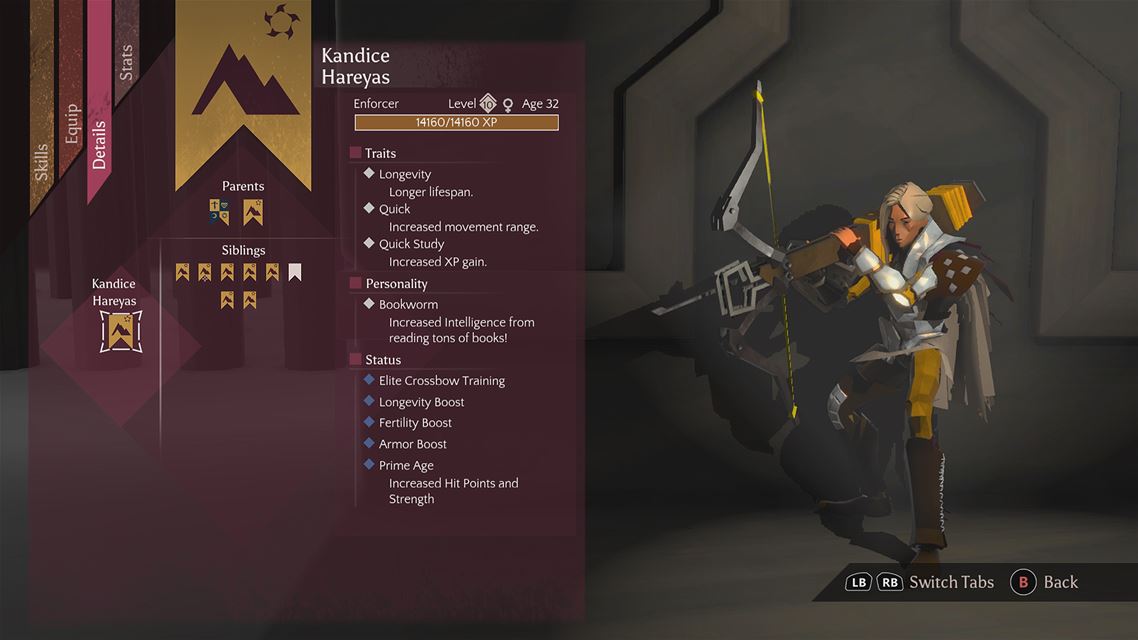
A strategy game that emphasizes marrying bloodlines and strengthening the genetic pool for a battle that lasts 300 years. The player is required to pay attention to genetic and personality traits that will influence the stats of future heroes for years to come. A bad trait such as "slow learner" from a mother can influence 6 children and dilute your genetic pool.

Combat

There are three core types of classes: Melee, Archer, and Alchemist. Through breeding hybrids can be created from these beginning three. The melee class known as caberjacks wield higher armor than the other classes but early on in the game are susceptible to death if not used carefully. Enemies will gang up on them if left out to dry. The archer class known as a hunter wields a bow and has powerful ranged attacks. They are especially important in the beginning of the game, but towards the end lose their value. The alchemist creates potions that create area effect damage and are probably the most powerful class if paired with caberjacks. 

This is a turn based game that uses tiles as the means for navigation. It's the exact same formula as XCOM: Enemy Unknown, and at times feels exactly the same but at times in inferiorly designed. Attacking from behind does not influence damage, and at times there is a "glancing blow" that will result in 1 or 2 damage but the player is never told why that happens. It seems random and can be frustrating when planning an attack. A game with such harsh consequences of losing a hero (gone forever) has to offer more feedback to the player and allow for strategy to ensue. 


Breeding

This is probably the most fun part of the game, but then becomes completely irrelevant at around year 220 and beyond, which are the hardest parts of the game. Examining personality traits and pairing them up with another to see the result is just fun, and is one of those moments you get to play god (sort of). The resulting traits from two parents are predictable most of the time, but there are times when an unexpected trait happens in a child. Between year 220 and 240 I had 3 sets of heroes completely wiped out due to what seemed like impossible map setups. Losing 15/26 heroes is scary and demoralizing, and at that point the game became a burden. One map resulted in having 7 enemies on the map that have a powerful attack that does tons of damage (2 hits will kill a hero), reduces XP, and causes a skill cooldown. To add, there were 2 enemies that spawn seedlings and have a powerful area attack. Not to mention that enemy gets two turns, one to spawn an enemy and then one to attack the player. When that enemy is killed, it spawns three more enemies in the location it died. How can anyone compete with that while having only 5 heroes in the field at a time?

The third battle I had this experience in row, I realized breeding was no longer going to win anything. I was forced to "Search for new heroes" which resulted in getting near max level heroes and it allowed me to complete the game. I just don't understand why there would be such a sudden shift in difficulty at that point in the game. 


Art

I did not mind the cartoony art style, and since it was consistent I enjoyed it. It made me feel like it was done on purpose to render low polys to accomadate the amount of data that was being interpreted by the processor and gains the ability of having lots of enemies on screen. It offers a lightness to the game that counters the harsh consequences and seriousness of gameplay, so that you are not so depressed when demolished in battle. In the final battle though there were some serious frame rate issues which would make the game awful to play. At times the game would freeze there were so much polygons being rendered. I had three alchemist on the board that could spawn pillirs and foliage for cover. Couple that with about 20 enemies on screen and the Xbox One could not handle it. I had to save my game in the middle of battle out of fear that the game was about to crash. From an aesthetic point of view it was pleasing, technically there is some work to be done. How did this miss during QA?

Sound

The background music is nice and fit the game well. There is a lot of time spent waiting for time itself to pass and this was not a bad experience. There are scripted voiceovers that occur at certain points in the game and they feel organic. I don't think every player will have the same experience as their are points in the game decisions are made that result in a different voice or line used. I appreciated the effort put into this. The sound effects of combat are rewarding and punchful. A bomb feels like a bomb, and a hit from a caberjack feels intense. The audio is a high point for this game. 

Conclusion: You are better off playing a game like XCOM: Enemy Unknown for a $20 price point. There are some really cool things done in this game like the lineages created but at times you feel cheated by the level design. I got this game for free, and the 20 hours I put into it were worth it. I had a good experience but if I paid for this game I would be annoyed I wasted my time.


Tuesday, September 9, 2014

Destiny


Rating for this game: 9.9

Happy Price: 69.99 (House of Wolves DLC)

Gameplay


The best way I can describe Destiny is take Halo, Call of Duty, Borderlands, and Mass Effect and put them into one game. You have the tight controls of Halo, the iron sights in Call of Duty, FPS RPG elements taken from Borderlands, and special power builds similar to Mass Effect. Oh yea, not to mention this game takes place in an open world with endless amounts of adventure to do with friends.

Campaign: It is recommended that one does the campaign before entering multiplayer, because you will take your character into multiplayer that is used in the campaign. It's best to level that character up and upgrade weapons before entering that battlefield. That said, the Destiny story isn't all that great. You play as a guardian trying to protect Earth from four different alien races, whom in turn are also fighting each other for the right to take over the planet as well. You start on Earth where you deal mainly with the Fallen alien race and get a taste of the hive. You then go to the Moon, Venus, and Mars where you deal with the other 3 alien races. It all culminates to you defeating all of them, and Earth is saved. Very predictable. The adventure is undeniably fun however, and is worth the 10-15 hour campaign. It's a great way to learn the basics and how the classes work, and you will find which one suits your play style the best.


Multiplayer: This is where all the action is, and where I've spend most of my time. There is a lot to do regarding PvP and PvE. This game incorporates farming and loot in a FPS MMORPG, so you can imagine how fun this is with friends. Unlike Borderlands, teammates do not have to compete for loot. If an enemy drops something in the midst of battle, it is yours. PVP modes are set for the most part, but on the weekends there are exclusive modes that offer different modes of play. It provides fresh experiences every weekend and allows for the game to remain relevant. For example the Iron Banner takes the users actual level and weapon damage value to determine just that against another guardian. All other PVP multiplayer modes flatten these out, but players still get the unique benefits to each weapon. For example "bullets from this weapon ricochet off of walls"


Multiplayer Maps: I wasn't able to find one that I loved, but there isn't one that I hate either. You can see the Call of Duty and Halo clash happening here. Bungie maps typically have levels or planes to them, and they are structured and defined. COD maps don't typically follow a structure, there may be multiple assymetric planes in a map, and Destiny has this. It feels a bit strange to play a game that feels like Halo, but the maps feel like COD set in a Halo world. There is so much action going on with Grenades, Golden Guns, Invisible slashers and Hulk Smashes going on, that its not really a factor. The maps are still fun, but its always nice to have that one map you love in a game. 

Classes: There are three classes to pick from when the game is started. The Tank, The Assassin, and the Mage. Offically they are called the Titan, Hunter, and Warlock. They each provide advantages in gameplay and suit different play styles. I played as the most boring but most effective class, the Defender Titan. My super is a bubbleshield that offers myself and teammates buffs. Compare that to wielding a sword, sending a superblast from your hands, a hulk smash, a golden gun, and throwing strange fire grenades. My bubbleshield with a heavy weapon has gotten me quite a few multikills, even though its not the most sexy super to have.

https://youtu.be/SrbWTXyjJHI?t=3m51s


Art

The art is top notch and AAA as would expect. There is an immense about of creativity. The Crota are probably the coolest race of alien and looks like a monster that belong in video games. I feel like there was some freedom with the art style and artists were able to create what they wanted. 

Environments: This game takes place on 4 different planets. That is very difficult to do correctly from an art point of view. That means the moon has to feel like the moon, and the Earth has to feel like the Earth. Each planet feels different and credit has to go to the art team to achieve that. It doesn't feel like I played a game that had different planets and there was just a texture overlay tricking me the whole time, even though its possible that is what was happening. 

Characters: The Hunter is undeniably the coolest looking character in the game. Just a badass looking assasin type of character that looks the part. They get capes and its fun to change them up, since its such a visible and defining part of the character The Titan is probably the least interesting but still has style. It would have been better if there was more emphasis on the shoulders or upper body area that would make it unique. The Warlock wears a trenchcoat type of thing which is also cool, it reminds me of Neo from the Matrix and has the same effect as the Hunters cape. 

Conclusion

There is so much to do in this game that its impossible to even write about all of it. I did not even get into the raids which are done when your character is completely leveled up. Everything from top to bottom in this game is great. Art, gameplay, sound, social activity, it highlights all the great things video games can do and executes on them. It's not the MMORPG that WoW is, but its still great. In my opinion this is the best game made in the last 5 years and one of the top games of all time.


Sunday, June 8, 2014

The Walking Dead: Season 1


Rating for this game: 8.5

Happy Price: 24.99

Gameplay

Walking dead is a narrative driven adventure game that mainly consists of quicktime events that lead to decisions that alter the course of the story. The focus is choice and ability to make decisions quickly, and dealing with the consequences of each decision. It doesn't take long before you realize decisions matter and you must be fully invested and attentive during gameplay. 

Decisions: This game throws a lot of difficult decisions at you, and you can only sit on your couch and be thankful that these are not real choices you have to make in life. However a decision made in episode 1 can effect something that happens in episode 4, so decisions have a lot of weight to them and feel very real. It makes for an edge of your seat experience that you need to fully invest in. The player has to pay attention to what is going on and understand the context of each situation. A wrong comment or suggestion can alter the group's perception of you and have consequences that are not entirely obvious, as if the NPC's have minds of their own. The ways the story can branch off displays great game design and programming. Everyone that plays this game will have a slightly different experience. 


Killing Zombies: Killing zombies is not the focus of this game, but still looms as the consistent threat throughout the game which stays true to the television series. Most of the conflicts happen when coming across other humans. When put in situations where Zombies need to be dealt with, the controls are very simple. Either aim with the cursor and press A or repeatedly tap a button in situations where there is a test of might. Based on decisions made, these confrontations can vary. If I decide to look around and find a knife or handgun, then my next encounter will go smoother as opposed to not having anything at all. I made sure to scavenge every area I was in to avoid such situations. 

Cinematics

Acting: The voice acting is spectacular. Heavy emotions are in full force in this depressing apocalyptic world, and it comes through in dialogue. There are times when the writing feels a bit forced, but the voice acting covers it up. The expressions of the characters can be inconsistent. At some points It's very good and everything comes together beautifully. At other points, things feel very rushed and there seems to be a lack of attention to detail. This comes through sometimes when zombies are chasing the character and there is an expressionless look of fear that stays plastered on the player's face. It doesn't take away from the emotion felt during these situations though, but is still something that is noticeable. 


Embedded Gameplay: You must pay attention during cinematics because it's apart of the game. Dialogue will suddenly stop and a timer will appear giving the player about 5 seconds to read all 4 available decisions that can be made, then the player must react by pushing the correct button. The short amount of time given to make the decisions keep the story moving at a correct and natural pace as natural dialogue would, adding realism and pressure to each situation. This is where the game thrives, it's a great mechanic and innovative way of integrating story telling and play into one. Games like Mass Effect and Dragon Age allow the player to make branching decisions, but can stop the game, think about it, then choose what I want to do. Walking Dead does not allow this, and incorporates your own psychology and behaviors into the game.

Conclusion

Worth playing by anyone and everyone. This game is very accessible to people that are not hardcore gamers or gamers at all. Very simple controls and gameplay hinders on good decisions, not necessarily reactions with fingers. I will definitely pick up Season 2 and play other games by Tell Tale. However the experience is very intense and does not allow for side conversations with ACTUAL people. So I will have to pickup another Tell Tale game when my girlfriend is out of town or something.