Showing posts with label game reviews. Show all posts

Wednesday, August 19, 2015

SMITE


Rating: 9.5
Happy Price: 29.99

Gameplay

Smite is a third person MOBA where the player controls pagan gods of multiple cultures. It successfully blends the coordination needed to be successful in any third person game and the strategic nature of a MOBA. Having direct control over the success of a battle is a feeling I never experienced in a MOBA, where most of the time I feel outwitted or under powered as I try to navigate spaces with a mouse click. 

Variety

The character selection is huge, and every character feels different. There are multiple hunter classes for example, but Medusa and Anhur play differently in that respect. Your character builds will remain very similar per class, which is something I enjoy because the familiarity of my builds will translate to another character as I'm trying to learn them. Like in any MOBA there are tiers of characters, and even though over time you will main a god that suits your play style, there is no denying certain gods are just better than others. However Hi-Rez stays true to this by having gods like Thor and Zeus as top tier, as folklore suggests, they are indeed better than some other gods. Can Medusa defeat Zeus in a one on one battle? Sure, however, I would not partake in that battle solo as Medusa. Each character has similar magic powers that consist of one penetration beam power, an area effect, a concentrated attack, and the ultra which varies. Some characters don't follow this template, for example Zeus's powers have to be used in a particular order for maximum damage. The characters are easy to pick up, but take time to master, which is just the sweet spot any game developer is looking for.

smite characters but likely outdated since this updates all the time

Game Modes

There are multiple game modes that itch different scratches. There is The Arena which is just an open area that is 5v5 with minions that spawn. This is a great place to try out new characters since it's non stop action and support from teammates is all around. These game sessions last for about 15 minutes so in a short time investment you can see how a character pans out fully maxed with items and experience. Joust is a 3v3 one lane game mode that is action packed and has a short session time as well, about 15 minutes or so. The downside is depending on how the game goes, players will max out at around level 16 so you don't get your character to full potential. Conquest is the standard 5v5 game with 3 lanes. These games can range from 20-40 minutes but are the most fun since it follows the standard MOBA format of ganking, pushing, defending, and farming. I would not recommend using an new character in this format since players tend to be more serious about wanting to win, and expect you to have an idea of what you're doing. Other game modes like Arena or Joust are a bit more casual. 

In the arena using a slowdown attack and throwing spears with a lion


Flow of Gameplay

Games usually begin with the usual dance of all level one characters at the beginning of any MOBA. The delicate dance of farming minions as the opponent is doing the same to yours, both tempted to attack one another. Both go in for quick jabs and escape, since an early death or kill will have major consequences as the other side will level up and have access to better equipment faster. Ganking is a little more difficult to do since it's third person and the lanes are larger in proportion to the player than other MOBA's I've played. However as the game goes on, communication becomes key. Listening to teammates when they suggest "retreat" or "go left" is imperative since the intuition of feeling in danger is very real in this game. Knowing when another player has an ultra ready can be a scary thing, and it can be calculated most of the time if a skirmish will be lost. I played a game where we had out killed the other team 37-24 and thought we had it in the bag. We just killed the entire enemy team and felt great. We were kind of doing our own thing but all pushing to the other base, but unknown to us the other team all spawned at the same time and pushed together, and ended up taking out our Titan. We lost that game in shock, but its moments like that which make me appreciate this game.

The Ultimate attack used by Poseidon in Smite

Community

SMITE has the best community for any MOBA I've played to date. When comparing to League of Legends or DOTA where making mistakes results in a lashing from teammates, that culture does not exist with this game. Rarely have I seen a teammate say "uninstall" or things of that nature. A lot of the time there are things like "lol" being said when someone does something stupid. Saving a teammate, awarding them health, or leaving them a damage buff will usually result in a "thanks" from them. Generally people don't feel entitled or have these mandatory predetermined objectives each player should do. If I'm playing Tank, I don't mind players telling me to tank an enemy tower if it makes sense to do so. Compared to other MOBA communities where they say "tank PLEASE" with tone suggesting they are frustrated with me, it's more of a "you should do this to help the team" tone. After games people tell each other good game and will reflect on what happened. I've also had tons of friend invites in the 35 hours I put into the game. It helps when you go 16-4 or have a penta kill, people tend to want to play with you.

Art

Nothing is going to blow you away, I don't think that was the point of this game. The art style is very colorful and cartoony, without too many deep or granular textures to make anything look very real. Lighting is not very dynamic and there seems to be just one light tone throughout the space. The focus is on the gameplay, and I think implementing some of these things would interfere with bandwidth and accessibility. In some cases it would even effect gameplay depending on the color of a character and how they blended with the world. There are too many variables in this world to make art one of them. Everything is just good, I haven't seen anything that took anything away from the experience, and nothing art wise compels me to keep playing. It's on par with League of Legends and Dota and follows a similar art style.

Summary

This game shines on PC using the standard mouse and keyboard. Trying to play with a controller on the XBone was not too easy, and there was some loss in frame rate as well. I think there is some work to be done still for the consoles in that regard to make sure it feels as fluid as it does on PC. SMITE is free to play, but don't let that feeling suspicious of the quality. I put around 25 hours of gameplay in a matter of 3 days while I took some PTO. It's incredibly addicting and I would purchase the hero pack for 29.99 to support the developer.


Tuesday, March 17, 2015

Battlefield: Hardline


Rating: 8.8

Happy Price: 49.99

Gameplay

Hardline takes all the elements Battlefield players are used to and compresses them into more colorful and urban environments. The color palette is similar to GTA V but infuses tight FPS mechanics along with a frame rate of 60fps which is a noticeable upgrade. It makes for quick online gameplay and a satisfying single player campaign

Online: EA did a wonderful job marketing the online play with awesome shootouts, explosions, and unique experiences never seen in games before. Even though all these are possible, its rare any of it happens online. I've put 20 hours of online play in, and have never been side by side with an enemy vehicle in an epic shootout with 6 players. Typically what happens online is a chase will occur, the opponent will crash, you will zoom past them while shooting, the driver of your vehicle will stop and turn around, and the opponents have gotten out of their vehicle and are hiding in a building. That said, online play is still great and I'm not done playing. Combining the vehicles and destructible environments make for an endless amount of variables and each session feels different.


I prefer the gameplay over Call of Duty, but the progression system is slightly frustrating. There are two build outs for the players profile, cops and criminals, then the class loadouts creating a total of 8 different profile builds. Cash acquired during gameplay goes to one central player account, so you have to decide which side you'd like to build. Criminals and Police have access to different weapons, so buying a shotgun may not apply to your police build. Acquiring cash is not easy and you must perform well to make any substantial money, so it can be annoying when you enter a session as the police but most of your weapons were purchased on the criminal side. You essentially have to do everything twice. This gets deeper when you purchase items that apply to classes of that side. A scope for the assault class of your criminal build will make a dent in your pocket and will only apply to a class you may use 20% of the time. I would much prefer to have one repository of weapons that are class specific, so I can clearly invest in something and not feel so constrained. Thats what real life is for. 


The new online game modes are a fresh twist on the series. Dealing mainly with one team trying to steal loot from a location, and the police trying to prevent it. Sometimes this is one location, the loot is actually in vehicles resulting in chases, or can be in multiple locations. At first they are refreshing and new, but I find myself playing classic conquest more than anything else. It enables you to play battlefield for what it is designed for, vehicular mayhem and everything that comes with it. Flying a helicopter, parachuting out of it onto a vantage point, and setting up for sniping is incredibly fun. As the player you feel that you have found something unique and that is what makes this game great. Maps are generally smaller and more urban than previous games, so you get a better sense of where players are and the flow of action, similar to the Call of Duty series.


Single Player: HIGH PRODUCTION VALUE. Since the protagonist is a police officer, you are encouraged not to shoot all your enemies in sight. You can if you'd like, but the game becomes much harder and EXP is not gained by killing enemies. Instead you must flash your badge and arrest them or tase them. Half points given to tased enemies, but its actually more effective than shooting with a silenced pistol. Flashing the badge in front of three men equipped with body armor, shotguns, bad attitudes, and then arresting all three does not seem like a likely scenario. Especially after you just snuck into a drug compound. These are supposed to be dangerous people. That part seemed off and its a core mechanic of the campaign. It doesn't take away that its fun though, if you are spotted from a distance doing this, you will be shot. 


However the acting, cinematics, and level design is great. You participate in high speed chases, overwhelming shootouts, and environmental hazards that are done very well. The campaign plays like an episodic series so when an episode is complete, its followed by "Next time on Hardline" if you decide to take a break. It shows the highlights of that next episode and get you excited to play. I was surprised how good the single player story was. I would not prefer it over Destiny or Halo, but they did a great job introducing a new character, the supporting players, and progressing the story in a believable way. During the cinematics the expressions of all the characters are perfectly on point and each character's personality is clearly defined by facial expressions alone. The writers and animators at Visceral did a great job and I'm looking forward to their next project. This is one of the first stories in gaming that did not feel like there were cheesy moments.


Conclusion

Highly recommend. This game does not feel like it was pieced together in one year. The story and attention to detail makes it feel like a very high quality production. There are multiple moments like the clip I posted above where the building falls apart in the hurricane and you have to react to avoid death. These things keep you engaged and wanting more. Online play is super fun, but not something I ever got addicted to or woke up wanting to do. It satisfies a need though when I want to shoot something or blow some stuff up. 


Tuesday, October 21, 2014

Massive Chalice


Rating: 7.9

Happy Price: 9.99

Gameplay

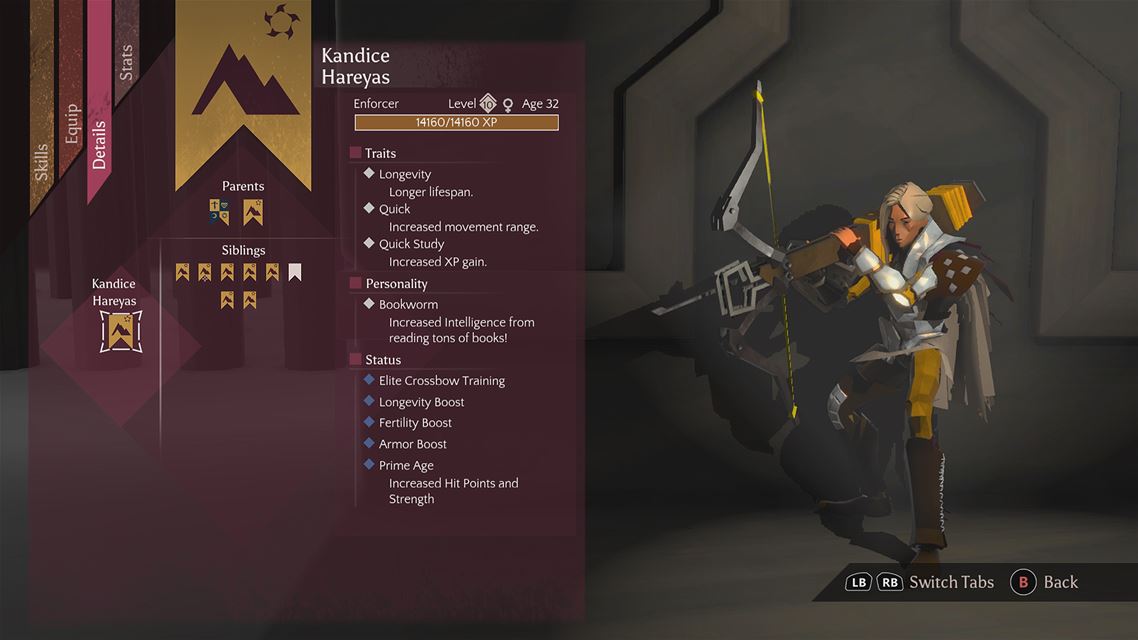
A strategy game that emphasizes marrying bloodlines and strengthening the genetic pool for a battle that lasts 300 years. The player is required to pay attention to genetic and personality traits that will influence the stats of future heroes for years to come. A bad trait such as "slow learner" from a mother can influence 6 children and dilute your genetic pool.

Combat

There are three core types of classes: Melee, Archer, and Alchemist. Through breeding hybrids can be created from these beginning three. The melee class known as caberjacks wield higher armor than the other classes but early on in the game are susceptible to death if not used carefully. Enemies will gang up on them if left out to dry. The archer class known as a hunter wields a bow and has powerful ranged attacks. They are especially important in the beginning of the game, but towards the end lose their value. The alchemist creates potions that create area effect damage and are probably the most powerful class if paired with caberjacks. 

This is a turn based game that uses tiles as the means for navigation. It's the exact same formula as XCOM: Enemy Unknown, and at times feels exactly the same but at times in inferiorly designed. Attacking from behind does not influence damage, and at times there is a "glancing blow" that will result in 1 or 2 damage but the player is never told why that happens. It seems random and can be frustrating when planning an attack. A game with such harsh consequences of losing a hero (gone forever) has to offer more feedback to the player and allow for strategy to ensue. 


Breeding

This is probably the most fun part of the game, but then becomes completely irrelevant at around year 220 and beyond, which are the hardest parts of the game. Examining personality traits and pairing them up with another to see the result is just fun, and is one of those moments you get to play god (sort of). The resulting traits from two parents are predictable most of the time, but there are times when an unexpected trait happens in a child. Between year 220 and 240 I had 3 sets of heroes completely wiped out due to what seemed like impossible map setups. Losing 15/26 heroes is scary and demoralizing, and at that point the game became a burden. One map resulted in having 7 enemies on the map that have a powerful attack that does tons of damage (2 hits will kill a hero), reduces XP, and causes a skill cooldown. To add, there were 2 enemies that spawn seedlings and have a powerful area attack. Not to mention that enemy gets two turns, one to spawn an enemy and then one to attack the player. When that enemy is killed, it spawns three more enemies in the location it died. How can anyone compete with that while having only 5 heroes in the field at a time?

The third battle I had this experience in row, I realized breeding was no longer going to win anything. I was forced to "Search for new heroes" which resulted in getting near max level heroes and it allowed me to complete the game. I just don't understand why there would be such a sudden shift in difficulty at that point in the game. 


Art

I did not mind the cartoony art style, and since it was consistent I enjoyed it. It made me feel like it was done on purpose to render low polys to accomadate the amount of data that was being interpreted by the processor and gains the ability of having lots of enemies on screen. It offers a lightness to the game that counters the harsh consequences and seriousness of gameplay, so that you are not so depressed when demolished in battle. In the final battle though there were some serious frame rate issues which would make the game awful to play. At times the game would freeze there were so much polygons being rendered. I had three alchemist on the board that could spawn pillirs and foliage for cover. Couple that with about 20 enemies on screen and the Xbox One could not handle it. I had to save my game in the middle of battle out of fear that the game was about to crash. From an aesthetic point of view it was pleasing, technically there is some work to be done. How did this miss during QA?

Sound

The background music is nice and fit the game well. There is a lot of time spent waiting for time itself to pass and this was not a bad experience. There are scripted voiceovers that occur at certain points in the game and they feel organic. I don't think every player will have the same experience as their are points in the game decisions are made that result in a different voice or line used. I appreciated the effort put into this. The sound effects of combat are rewarding and punchful. A bomb feels like a bomb, and a hit from a caberjack feels intense. The audio is a high point for this game. 

Conclusion: You are better off playing a game like XCOM: Enemy Unknown for a $20 price point. There are some really cool things done in this game like the lineages created but at times you feel cheated by the level design. I got this game for free, and the 20 hours I put into it were worth it. I had a good experience but if I paid for this game I would be annoyed I wasted my time.


Sunday, June 8, 2014

The Walking Dead: Season 1


Rating for this game: 8.5

Happy Price: 24.99

Gameplay

Walking dead is a narrative driven adventure game that mainly consists of quicktime events that lead to decisions that alter the course of the story. The focus is choice and ability to make decisions quickly, and dealing with the consequences of each decision. It doesn't take long before you realize decisions matter and you must be fully invested and attentive during gameplay. 

Decisions: This game throws a lot of difficult decisions at you, and you can only sit on your couch and be thankful that these are not real choices you have to make in life. However a decision made in episode 1 can effect something that happens in episode 4, so decisions have a lot of weight to them and feel very real. It makes for an edge of your seat experience that you need to fully invest in. The player has to pay attention to what is going on and understand the context of each situation. A wrong comment or suggestion can alter the group's perception of you and have consequences that are not entirely obvious, as if the NPC's have minds of their own. The ways the story can branch off displays great game design and programming. Everyone that plays this game will have a slightly different experience. 


Killing Zombies: Killing zombies is not the focus of this game, but still looms as the consistent threat throughout the game which stays true to the television series. Most of the conflicts happen when coming across other humans. When put in situations where Zombies need to be dealt with, the controls are very simple. Either aim with the cursor and press A or repeatedly tap a button in situations where there is a test of might. Based on decisions made, these confrontations can vary. If I decide to look around and find a knife or handgun, then my next encounter will go smoother as opposed to not having anything at all. I made sure to scavenge every area I was in to avoid such situations. 

Cinematics

Acting: The voice acting is spectacular. Heavy emotions are in full force in this depressing apocalyptic world, and it comes through in dialogue. There are times when the writing feels a bit forced, but the voice acting covers it up. The expressions of the characters can be inconsistent. At some points It's very good and everything comes together beautifully. At other points, things feel very rushed and there seems to be a lack of attention to detail. This comes through sometimes when zombies are chasing the character and there is an expressionless look of fear that stays plastered on the player's face. It doesn't take away from the emotion felt during these situations though, but is still something that is noticeable. 


Embedded Gameplay: You must pay attention during cinematics because it's apart of the game. Dialogue will suddenly stop and a timer will appear giving the player about 5 seconds to read all 4 available decisions that can be made, then the player must react by pushing the correct button. The short amount of time given to make the decisions keep the story moving at a correct and natural pace as natural dialogue would, adding realism and pressure to each situation. This is where the game thrives, it's a great mechanic and innovative way of integrating story telling and play into one. Games like Mass Effect and Dragon Age allow the player to make branching decisions, but can stop the game, think about it, then choose what I want to do. Walking Dead does not allow this, and incorporates your own psychology and behaviors into the game.

Conclusion

Worth playing by anyone and everyone. This game is very accessible to people that are not hardcore gamers or gamers at all. Very simple controls and gameplay hinders on good decisions, not necessarily reactions with fingers. I will definitely pick up Season 2 and play other games by Tell Tale. However the experience is very intense and does not allow for side conversations with ACTUAL people. So I will have to pickup another Tell Tale game when my girlfriend is out of town or something.