Thursday, June 2, 2016

SUPERHOT


Rating: 8.5
Happy Price: 9.99


Gameplay

When you move, time moves. When you don't move, time moves very slowly. Bullets move very fast, so not moving for long periods of time is not a smart thing to do, but the game provides enough time to evaluate each situation. However, it's up to you on executing your plan which is harder than it sounds when you think time stops and you have a gun in your hand. 

Time

When time is moving at a normal pace, your brain can predict where or how something is going to move based on trajectory and direction. However in SUPERHOT this perception we take for granted goes away. When time stops, bad guys stop as well even while in a full sprint. Shooting where a bad guy stands is a sure miss, since they are running. Instead you must look at their feet or hips to determine what direction they are running in, and somehow have to determine how fast they are going so you can aim properly. This is balanced by having one bullet shatter bad guys, because two shots would be far too difficult.


Art

Only red, white, and black are the colors used along with some nice lighting. The models themselves appear to just be test models that are used for sample animations or test projects in UDK. However, the simple approach works and I feel stupid they beat me to it. Had I known I could incorporate laziness into my story and create a fantastic art style out of it, I'd be all over it. Kudos to the team for focusing on design and mechanics over artwork. Instead of looking at suspect character models, I look at neutral enemies so I can focus on the task at hand. It's not something I would have though in a million years would work, but it does. 


Story

Because the entire game is destroying red bad guys, there is some importance on the narrative, and the way it's incorporated into gameplay is quite innovative. It starts as you are a normal guy that just downloaded a game from a file sharing community, which escalates into this singularity that eventually leads you into doing things in the game that effect reality. How it all unfolds combined with the gameplay creates a steady flow and great pacing. The only thing that made me put my controller down was frustration. However the story is extremely short, hence my low price point on the game.


Summary

SUPERHOT is a must play, must buy game. You will play something you've never experienced before and for that reason alone it's worth it. I paid $25 for it and don't regret it, however if I could, I would wait for a sale. I will let this montage speak for itself.


Saturday, May 28, 2016

Battleborn


Rating: 7.9
Happy Price: 59.99


Gameplay

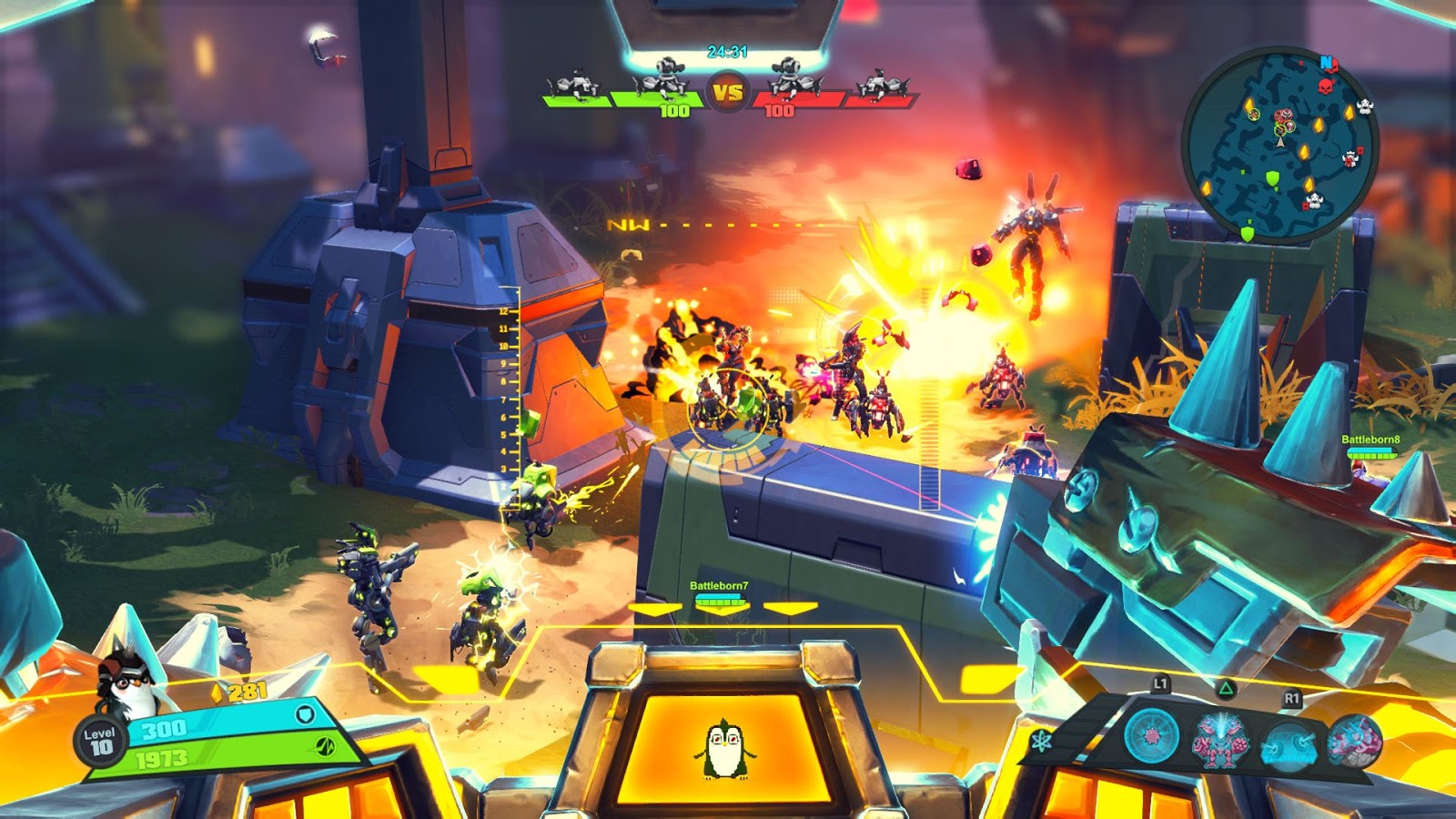
Battleborn is a first person MOBA which has three different primary multiplayer game modes. The blending of a MOBA and FPS is brand new which creates a fresh experience for experienced MOBA players, and something different for typical FPS players. This also creates a bit of a clash with players, since those are two different audiences which makes matchmaking a mixed bag.

PVP 

There are three different game modes: a minion guiding mode, domination, and a linear point capture mode. Meltdown is the minion guiding mode, and unless you have a team of people that are communicating, it's a frustrating mode to play. Many players that come from FPS assume this is a team deathmatch style game which throws things into chaos. This was great for me individually because I'd constantly bait players who were dumb enough to play that way and score kills, but the problem is your teammates also play this way. I can see how the games were suppose to go. Groups of minions meet in an area, and then the player controlled characters duke it out in an area, winner of that battle will score the minions. The problem is there are five people on each time and no jungle, and the minions spawn at the same time with two lanes. This essentially takes the idea of having 2v2 on each lane with a jungler out of the picture. I think games would be more competitive and balanced if they were 6v6.

Domination is just not very interesting. The game mode is very familiar to most FPS players and there really is no need to discuss it much

Incursion is a decent experience since it's objective based and very team deathmatch oriented. The objective is very clear, and the strategy straightforward. Each team has two points that must be captured. Those points are guarded by a very tough sentry that has to be destroyed. There are numerous powerups and defenses that can be purchased and upgraded by killing minions and enemies. In addition to building defenses, there are mercenary camps that unlock powerful NPC characters that help attack other players and the objectives. Hiring mercenaries takes teamwork, you have to go to the mercenary camp and kill the mercenary(s) there, if you defeat them, you have to sit on a portal for about five seconds. During this time, the enemy team can steal the mercenaries. Doing this solo is very difficult and requires coordination, and mercenaries are necessary to win the game. A good solo performance can make the difference in this game mode, but if the other team is coordinated and frequently hiring mercenaries it turns into a 5v7 matchup and that will seal the game.


Character Variation

There are five factions and five class types in total. The class types include the Assassin, Tank, Healer, Sniper, and Warrior. Characters need to be unlocked by leveling up your profile or accomplishing specific game tasks like finishing story level four. It can take hours to unlock the entire roster, which is a bit detrimental to the experience of the game. Of the five starter characters, I'd say two of them are able to compete against players that have leveled up and have new characters. Thorn the Sniper and Roth the Assassin have very powerful skillsets that can do tons of damage. The other three characters that start the game are pretty average and underpowered, so when match up against people that have played the game longer it's unbalanced. When new characters are unlocked, they generally all play the same depending on class. At times it feels like it doesn't make a difference which assassin or tank I use, the only difference is their special attacks. When comparing to a game like Overwatch, it's a bit disappointing. There are 25 total playable characters with DLC on the way, but it will take hours of gameplay to ever experience all 25 players.


Story/Campaign

The campaign opens with this beautiful anime style animation that really kicks off the story and gets the player inspired to play the campaign. It's probably one of the best introductions to a story I've ever seen. I was really hoping that would continue throughout the experience, but it didn't. You would simply finish a section of the campaign, then move on to the next mission. It didn't create a cohesive experience, however the in game story writing was entertaining enough to keep you drawn in. The in game story writing was humorous and clever, which is consistent with Gearbox game leading back to Borderlands. Claptrap's personality is all over this game making light of the serious situation everyone is in mixed with the dark humor.

The way the campaign is structured is the team has lives. Each time someone dies, an life is lost for the entire team. What I found to be the most irritating is when you would get paired up with a crappy player that would constantly die, and would drain the team of lives. Because of this, I tended to do solo missions. The game was designed to have multiplayer missions with large areas to battle and mixing special attacks to create an awesome cohesive experience. I don't think Gearbox did a great job at creating these moments since it was so frustrating to see teammates constantly dying which would effect the whole team. Nothing is more annoying than spending 40 minutes in a mission, dying one time and having to start over from the beginning. While everyone else on the team died two or three times. Another frustrating piece was if internet connection was lost during a SINGLE PLAYER CAMPAIGN you would be disconnected from the mission and it would not restart you from your last checkpoint when attempting to replay it. I remember vividly the third mission I had the final boss at 25% health SOLO and losing connection for less than one second (I was wired in with an ethernet cable since it happened to me once before when wireless). This is an ongoing problem, and made me cautions of doing the campaign since I lost about 90 minutes of my life due to disconnection problems on a 50mpbs line wired in.


Art

I've always enjoyed Gearbox's style of the 3d cell shaded characters, it's their style and how the studio is recognized. The different character types are interesting to look at and there are tons of character models in the game from minion, to sentries, and multiple NPC race types. Each character has a high level of detail like Golden sniper rifles with engravings and telekinetic rapiers. Each faction has their style and it's consistent with all the characters which created a cohesive visual experience that felt tight and clean. I'm pretty sure every LLC character had gold and engravings somewhere on their bodies, while the Jennerit all had red and plasma based weapons. The art style and quirky animations definitely enhances the experience of the game.


Summary

Battleborn makes a great initial impression, but it slowly begins to fade as you continue to play and unlock characters. It becomes clear that unlocking all the characters will become a tedious task that will take hours to complete, and for what? A game like Overwatch took the opposite approach, where you can pick any character and can switch each death. That game is more fun, and Battleborn will pay the price for it. It's a game I will likely keep in my library as they make updates, but I don't know for how long.   

Saturday, May 14, 2016

Ratchet and Clank


Rating: 9.4
Happy Price: 39.99


Gameplay

Ratchet and Clank is a third person platformer that focuses on unique weapons, character development, and puzzles. The protagonist has a strong and defined personality which creates for a great narrative. Supporting characters and villains are equally funny and smart, creating a great game that blends story and gameplay very well.

Combat

Jumping and dodging over a barrage of missiles while firing a pixelating shotgun never gets old, and this game is full of moments like that. Nothing feels cooler in a video game when you're outnumbered by a bunch of enemies and their bullets or whizzing past you while making an effort to dodge and shoot. It doesn't feel scripted, it's something you as the player are doing, and there is an element of skill associated to it. That is the beauty of the 3d platformer, but namely Ratchet and Clank has always been the best at achieving this, hence its remaining existence. There are tons of weapons to choose from, and the cool thing is the more a weapon is used the more it levels up. This way your favorite weapon quickly becomes the "go to" when in tight situations. All the weapons are fun to use, and it's important to level up all weapons in the long term.


The need to upgrade all the weapons forces the player to use all of them, and gameplay style changes with every weapon. The sniper rifle will obviously be played differently than the rocket launcher. But with limited and max ammo for each weapon, you know that the final boss will require your entire arsenal to defeat. This is taught to the player by tough sub-bosses that require an effort that will require every single weapon to be used at least once. That is achieved through both great game design and level design. 

Upgrading

I touched on it a bit, but there are tons of things to upgrade which create a very addicting experience. You have to collect bolts to purchase new weapons, which increase in price as the game goes on as the new weapons are more powerful than the last. Ratchet himself will earn XP that will increase his health. Using weapons repeatedly will level up the weapon which give it passive upgrades. Then there is another rare currency that can be found that adds unique attributes to each weapon. For example increasing the max ammo or fire rate. However upgrading things in a certain cluster will unlock "bonus" augments that do things like lifesteal. Yet you won't know what these bonus augments do, creating a fun surprise when you unlock them. There are cards to collect that do things like "5% more bolts upon killing an enemy" that make the player go out of their way and explore this beautiful environment. Once a weapon has maxed out, you can unlock the "Omega" version which can only be bought when the game is replayed on hard mode. All these things together create an upgrade fest where your virtual character is getting better, but you as a player are also getting better. This is one of the first games in a while I found challenging and equally rewarding. I died a few times, which doesn't happen a lot in modern games. 


Pacing and Narrative

One of the things I'm not fond of when playing games is inspecting every crevice and corner just to say I've checked every spot. However for some reason I wanted to do this when playing this game. It created a great balance of intense action and times of peace where I was just exploring the gorgeous landscape foraging for bolts, cards, or "Raritanium" to upgrade my stuff. It helps that levels aren't overwhelmingly huge which makes it an achievable option to explore the entirety of an area without wasting tons of time doing so. It seemed like every time I did something off the beaten path I was rewarded for it, so I kept doing it. 

In terms of leveling up, it just so happened that a few moments before reaching the final boss, I had finally fully upgraded Ratchet and all my weapons to their max. The augments were not fully completed, since raritanium is rare and requires a second playthrough obtain it all. This means that the game was designed that way which takes incredible math, testing, and design to pull off. It was one of the things I was most impressed with since many games today are open world and don't really emphasize on these design elements in focused way.


The story is relatively cliche, a main villain with a bunch of powerful henchman you have to defeat, then finally reaching the final boss. However the execution of it was again, one of the best experiences I've had on a current console. I have not seen the movie, however the cut scenes that drove the story were animated and rendered so well the rivaled a feature film production. The voice acting was on point for each character, blending elements of humor and intelligence in something you'd expect from Pixar. It invested me as a player into a predictable story, but I was invested in impressing the Rangers and defeating Dr. Nefarious.


Art

 The franchise builds off of the art style it's had for years. It's cartoony and focuses on roundness instead of hard edges like many "realistic" games do today. The fantastic lighting, dense population of objects in levels, textures, and animation create a colorful yet professional style. The way light bounces off the colorful environment is a huge upgrade over the flat colors we've seen in the past versions of Ratchet and Clank on previous consoles. The way shadows appear under foliage but also large objects creates a dynamic environment you have experienced in GTA V but combines the colorful and cartoony art style to accommodate it. I can't help but think this is the proper evolution of video games, the art is suppose to reflect fun over simulation.  

The character models and animations are not something to gawk over, but they are creative, consistent, and have no flaws which take away from gameplay. The character animations themselves enhance gameplay since they are so cleanly done and have a high degree of quality. Anything of relevance was done with a very high quality. I believe the spaceships used probably took more time to model than Ratchet, but spaceships may only be played with for an hour of game time while Ratchet is on screen for at least 15 of those hours. The level of attention paid to even the most insignificant things the player might focus on really drives home the level of excellence and quality this game provides the player. Many shortcuts could have been taken for a game that is a reboot and sold for 39.99, but that didn't happen. 

Summary

When choosing between XboxOne and PS4 I chose the PS4 for the Ratchet and Clank series and Uncharted since I did not have a PS3 (I now have both). I had very high expectations and it was delivered. A must buy for any PS4 owner and a game I will probably replay though which I never do. I need to upgrade my Omega weapons and replay on hard mode. The game was so much fun on a regular difficulty, but on hard mode with better weapons and more bolts, it's going to be even more exciting.

Sunday, May 8, 2016

The Division


Rating: 8.0
Happy Price: 59.99

Gameplay

The Division is a third person MMO that deals with "Division" Agents restoring order to a near apocalyptic Manhattan. The player is guided by main missions that drive the storyline, and many side missions to level up and get better gear for the main missions. Different sections of the city have a recommended level, and the player has the option to enter matchmaking and pair up with other "Division" agents. Four people can be in a lobby. 

Combat

Like with any Tom Clancy game, there is a nice sense of realism and grittiness when engaged in a firefight. Many different enemy types will be thrown at the player consisting of snipers, rushers, and general support. Strategy is required to be successful, however rarely is it ever used. Doing things solo is extremely difficult and will would require heavy grinding. When matched up with other players the game difficulty increases. However when paired with random players, it can be difficult to be on the same page when it comes to loadouts, classes, and strategy. 

When things get intense, naturally players will aim for headshots to get out of trouble. However enemies usually require 5-7 shots to the head before they go down on a standard assault rifle that holds 30 bullets. To kill an enemy without headshots can take 45 bullets, requiring a full clip of ammo to be used and a reload, for just one enemy. It's a bit contrasting in a bad way. One one hand there is this super realistic environment and battles require all this strategy, but then headshots aren't really headshots. However, if headshots killed enemies in 2-3 shots, the game would be too easy. I don't agree with the logic though, that making the game too easy for skilled players would mess up the balance or the experience they are going for. It usually just keeps players frustrated.


Progression

When talking about progression in a RPG, there are two things to consider, the narrative and the player. The game starts out with a great cinematic that clearly states what is going on and what your role is in the universe is. The first couple of missions do this as well, and there is a steady progression with the story and things start to develop in a way that is endearing and captures your attention. However at about the 10 hour mark, things start to get a bit strange. You start to go on missions and saving random people with important names, but then there isn't any follow up with these characters. This happens over and over again and you begin to wonder, why am I doing this? Who are these people? Why do I care about them, and how are they going to help my cause? Missions in general are difficult and frustrating, so caring about these things matters. Especially when missions can last 20-30 minutes. 

Character progression does some things well and some not so much. Leveling up weapons starts to get pretty boring after a while, due to the fact that really only the damage on them increases with a few alternating bonus effects like increased headshot damage or 18% increase in magazine size. When comparing to a game like Destiny where there can be massive upgrades to a weapon as you level up, it feels like you just keep getting the same weapon over and over again that is leveling up with you, but you still have to pay for it without your life getting much better. Upgrading skills is fun though, since these get you out of tough situations and you can target missions that will improve your skills. The upgrade system for skills is deep and if paired will with other players, can make huge differences in firefights. However matchmaking doesn't allow you to focus on playing with other class types. You have to rely on friends or people you've played with in the past that are building out a different class.


One issue with character progression is that it's very broken when you play with someone that is many levels above you. You can pair up with that person, and you can play a mission that is recommended for level 30 but your are an 18. The amount of XP awarded will level players up at a quicker rate as they just hide in a corner and let their partner do all the work. Doing this once can alter the entire landscape of someone's experience. I tried this one time, jumped up two levels, and then completed everything I had to do in a breeze. So if the game gets too difficult, just do that and now the game becomes extremely easy.

The Dark Zone

I'm not quite sure what the point of the dark zone is. It's like the only online game mode this game has is Iron Banner. In The Division, levels matter a lot. A level 14 will not compete against a level 16. Yet, the dark zone will have a range of "levels 10-15". If you run into a player at level 15 but you're at a 10, you don't stand a chance. Then, once at level 30 which is the max for the campaign, you enter the dark zone and can be paired with players at level 35 as well but with much better  weapons, so the same problem continues to persist. It would be more proper to flatten everyone out and allow for weapon buffs to allow for minute differences in battle the way Destiny does to allow everyone to play in an online mode. I love PvP but I always felt under powered and like I was missing out on this huge part of the game. It got to the point where I was frustrated with it, grinded to compete, then realized that's just dumb, and there are better games to play.


Art

I can't say enough on how good the artwork is in this game. The art style is very gritty and realistic which matches the mood of what is going on with the narrative. Manhattan is filled with texture and it's all done very well. It looks like people had just abandoned the place and there was chaos everywhere. This ties well with gameplay because there are always garbage trucks to climb on, cars to hide behind, places to explore, signs to read, and just things to keep you occupied. It's very gratifying to shoot an enemy full sprint in the head and watch the animations take over as they properly fall in a way that looks natural. Weather plays a factor as well, during a snow storm that particles will render your range of vision to be limited and it's very difficult to see enemies or navigate the terrain. From what I can tell, the A.I also can't tell where you are as well which results in cool close range battles. One of my favorite parts was opening up the map, which opens via a gadget on your wrist into a 3d hologram showing where you are and other key parts of the world. Panning to a key area will start an audio dialogue over a radio signal, which is something I've never seen before and creates an immersive experience as this super "Division" agent.

Summary

The beginning of the Division is great, but then it tends to wear off after about 10-15 hours. It's a great concept, but it just doesn't live up to the hype I saw in the animatic two years ago. The art and environment really carry the game. This game is a grindfest, and I simply don't have time to do things that are meaningless (side missions) to do things that are somewhat meaningful (main missions). There is tons of content in the game, and some people can get captured in the world. I think if I was unemployed I would like it more, but there are more fun games to play.


Monday, May 2, 2016

Table Top Racing


Rating: 7.0
Happy Price: 7.99

Gameplay

TTR is an arcade racer that deals with micro cars in all to familiar settings, but with a completely different aspect. What would it be like to race in a sushi bar, bedroom, or garage? Most of the time racing games deal with totally fake places, or super realistic environments, but TTR blends both. It creates a nostalgic experience, but once that fades you're left with the gameplay which can be underwhelming. 

Track Design

The track design is fantastic. The tracks are short which bode well with the car size, in terms of scale they match up nicely. Lap times range between 60-90 seconds and have tons of content in them. Around every corner is an interactive obstacle, powerup, jump, or hairpin turn. When turning, the camera also does this angle shift which adds an element of momentum shift even though you're not in the car. Around the track are hidden coins which yield huge amounts of upgrading currency. Getting these coins require a sharp eye and problem solving since it's not always obvious how to reach them. It mixes a puzzle game into a racing game, but it's not relevant enough of an action to call this a racing puzzle game. The placement of powerups and obstacles was done very well and it's obvious tons of testing was conducted, and a lot of effort was put into the placement of these items. The ideas for the tracks are great as well, as they add familiarity and fantasy to the racing experience. I think everyone has imagined what it would be like to have a real life racetrack in their bedroom.


Racing

The balance of skill and AI is handled well. As you progress from the beginner levels to the advanced, good racing will yield good results and dumb mistakes will cost you in the long run. Nothing is handed to the player, and even though the AI is tough there is a human element to them as well. For example when they jump off a ramp they are vulnerable upon the landing to lose control and fall off the track. Timing these events can give you an advantage when trying to overtake a first place vehicle that clearly has better stats than your car. The AI tends to know when this is going to happen however, and is very quick to press the "reset" button which puts them on the track after about a 1.5 second cooldown. 

It helps that there are many game modes, however the most fun is the core race mode where you do laps and have powerups, and the person that gets 1st place wins the race. There are other modes such as pursuit, cutthroat, time trial, clean races, and drift modes. However being forced to do these during championships can be taxing since I don't really want to race cleanly or do time trials in this setting with these car types. Powerups range from missiles to an acid trail, so they emulate similar functions as Mario Kart but a little more realistic.


Upgrades

As you accumulate coins, you can upgrade your current vehicle or save up for the next class of car. Most of your coins come from winning races, but very small amounts can be earned via using missiles or acid successfully. I found doing these doesn't really matter however, since a race might yield 2,500 coins but finding a gold coin on the track can yield 10,000 coins. Sometimes I would spend the entire race just finding coins without the intention of winning, which takes the challenge out of getting the coin and maintaining position in the race. This effectively breaks the game in my opinion. Once a huge amount of coins are accumulated, you can upgrade your car to the max, win your current championship, and then move on to the next one and repeat the process. There are many things to upgrade however. Things like acceleration, top speed, and handling are relatively cheap things to upgrade. However new tires can cost 20,000-60,000 which is about the cost of a car in the game. They provide passive abilities and probably are only required in the advanced stages.

Where did it fall short?

One thing that bothered me is the game does not support local multiplayer, but it looks like it's designed for a local multiplayer audience. I would never play this game online when I have options like Forza on the table for racing. My girlfriend wanted to play me in this game, but we could not enjoy it together. Another thing was there wasn't a narrative to drive gameplay and keep the player engaged. The game gets a bit repetitive and there isn't a huge car selection, or customization of the vehicles that are owned. This creates a small personal investment and things start to feel flat once all the levels are played. I don't have a real reason to advance or even try to beat the game. The soundtrack is ok at first, but the as the songs repeat they get annoying. The music does not shift to the background, it feels a bit intrusive at times because it demands presence when it probably shouldn't.

Summary

I can see why this game did so well on mobile devices, but it wasn't ready for the console market. You can get away with good raw gameplay on a phone, but a console demands story, multiplayer, and more options for car selection. Track design and the overall concept were good, and I really enjoyed the camera movement when turning. It gave the sense of G's being pulled on the body during tight turns. The unforgiving AI creates a nice challenge as well, and is balanced by the player's ability to turn things around. Racing feels organic which is great, there just isn't much purpose behind the racing.      

Tuesday, February 2, 2016

Not a Hero


Rating: 7.8
Happy Price: 4.99

Gameplay

A 2d shooter that focuses on quick reactions and a quick trigger finger, this is an unforgivably challenging game. Cover can only be initiated via a slide near an object that is eligible for cover, limiting this game to a few simple mechanics of sliding, cover, and shooting. Occasionally late game there is some planning and strategy involved.

Core Mechanics

I like to think of it as a side scrolling version of Hotline Miami, both games are gory, violent, and unforgiving. The player is basically slide tackling enemies to initiate a quick kill, or utilizing cover when outgunned. However there are many melee oriented enemies that will rush cover and will kill the player in one hit. Unlike Hotline Miami, in this sense I felt very under powered and often times it felt impossible to get out of a sticky situation. Melee enemies don't die with one or two bullets unless it's a shotgun, but shotguns have low ammo capacity. So three melee enemies and you're done in that case. The frustration mounts very quickly over time and there are no checkpoints. One mistake, or a shortcoming of the game can result in a death and the whole level has to restart.


One thing that was very frustrating was when I'd slide tackle an enemy, then go for the execution. When I got to the execution part, a melee enemy would be rushing me. The button for shoot and execution at the same time. So what would occur is the kill animation would take place over me shooting the melee enemy, and I would die. Amid all the chaos going on of slide tackling, cover, shooting, this doesn't happen all the time but is frustrating when it does because you have to start the level from the beginning. This game is harder than Hotline Miami, and does not reward you with doing some impossible or difficult things with checkpoints.

One thing I enjoyed was the character selection. Different levels had different layouts and enemies. The more challenges completed, the higher Bunnylord's approval rating was, which unlocks more characters. That means you could go back to older levels with more powerful characters and fully complete the levels, that way better characters are unlocked for the more difficult stages. It's not really explained anywhere how much challenges are worth towards the approval rating though, so you're not quite sure what will unlock what. It's a guessing game sort of, maybe if I complete all the challenges I'll get a new character? I'd like to know exactly how to get that new character before I invest time in doing it.


Writing

The writing is where this game shines the most. The story of Bunnylord trying to become mayor of a city and his crazy ideas of how to get there are humorous and a great play on modern politics. The group of people he employs to do his dirty work are called the "Bunnylord Fun club" which is just a funny name in itself. The humor is dark and brash, if you're into that kind of thing, you'll love this game. For example "Johnny, sorry about all those Samurai's, I had no idea they had machine guns hidden everywhere, next time i'll scout that better". That is not an actual example, but a poor rendition of what to expect. Essentially the story is Bunnylord hires a bunch of hitmen to kill bad guys, and then Bunnylord has to manipulate the media into making it seem like he did something good. However Bunnylord has to justify all his actions, and the way he does that is clever and funny.


Art

The art style is what drew me to play the game in the first place. The vibrant and bright colors combined with the fluid animations and gory kills creates a nice contrast. It fits together with a psychopathic mayor that kills people for voters. It fits with the whole modern retro gameplay style that I sort of expected, I went in knowing I was going to get a fast paced and difficult shooter before I even started playing. Everything is done cleanly, and there doesn't seem to be any shortcuts taken. This game is a true work of art. 


Soundtrack

It's definitely one of the best soundtracks in any game. Every stage has a modern chiptune that has hints of EDM or rock music. Every time I died, or booted up the game, I was filled with dopamine and serotonin, that's how good the soundtrack is. Devolver also published Hotline Miami which has a legendary soundtrack, and I think this follows a similar recipe for "really hard game, really good soundtrack".

Summary

The art, sound, and writing are top notch. The combat mechanics can be refined a bit more, but for the most part did what I expected and was bug free. The character selection was a highlight, but long frustrating levels without any checkpoints got old after a while. It got to the point where trying to beat the game became a chore, and that is never good.


Friday, January 22, 2016

Bit Blaster XL


Rating: 8.4
Happy Price: 1.99

Gameplay

Bit Blaster does a great job at finding the perfect balance of "easy to pick up, hard to master". The player's gun is always on auto fire, there is ammo to keep track of, and the velocity is fast or faster (if boost is used). It's action packed, and aside from the goal of getting a high score there is the goal of unlocking better ships. 


Enemies consist of primitively shaped asteroids (circles) that will get larger as the game goes on. Then there are floating nukes, ships that shoot, and melee ships. It's chaotic but the simple and vibrant colors on the black background create this cool neon light show. As simple as this game appears, there is more depth to it than meets the eye. There are a number of powerups that each player may individually enjoy. Therefore, you can hoard ammo and keep one powerup the entire playthrough if you wanted. Powerups also replenish ammo, but you are forced to shoot with that bullet. For example, if I had 100 ammo for my homing missiles and ran it down to zero, I could get the light saber powerup but it would only replenish to 35 ammo. When that happens, you will be forced to keep getting powerups. One thing I did not enjoy was the bouncy ball ammo was close to the same color as the enemy projectiles. Imagine 50 red balls bouncing around the screen until it hits an enemy, all the while the enemy shoots the same color at you. It can be difficult to decipher.

Progression

Most of the time in the 2D top down survival genre, there isn't much progression that happens outside of the game session. My favorite part of this game was unlocking new ships. There are special coins that seem to randomly generate when destroying asteroids or enemy ships. These seem to be more frequent the longer the player survives. Each ship costs more than the previous unlocked, so you can use the new ship to unlock a better ship. For me, this is what really sealed in the addiction. The gameplay is fun, but winning the high score really isn't all that important to me. Unlocking the ships and having a sense of accomplishment was more important, and is what kept me coming back. Each ship has a high score attached to it, so I learned that I played best with a slow ship, with a slow fire rate, but high shields. Someone else might like the fast ship with less shields and a higher fire rate.


Summary

Great addition to the Steam library. For .99 it doesn't get much better than this. You can play to the great chiptune included by default, or disable it and have your spotify open and just chill to this simple yet addicting game. The mobile version of this was not as fun playing in portrait mode. The long turn radius on a portrait screen did not feel right. On a landscape monitor however, it felt great.